She Remembers Your Ex-Wife's Name: The Keepers of the Story We Can't Afford to Lose
There's a woman in Marion, Ohio, who knows what year the Elks Lodge painted its front door blue. Not because she was asked to know. She just does.
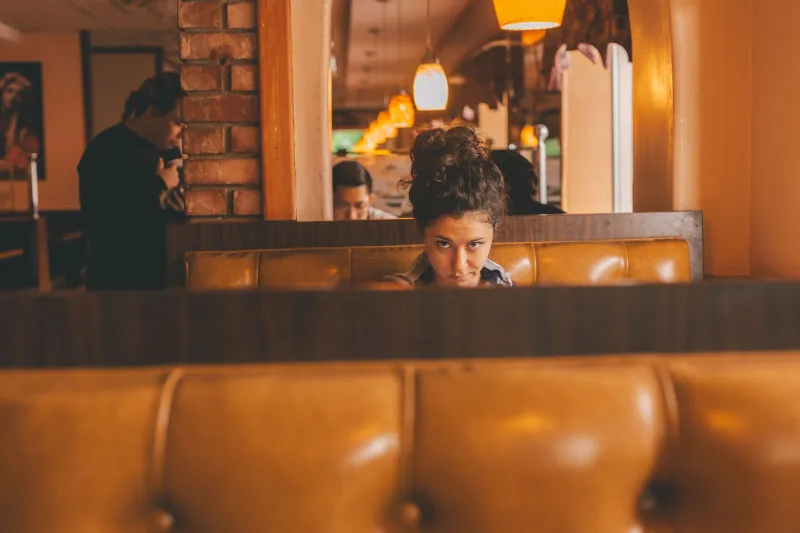
Her name is Dorothy Wills, she's 74, and when I sat down across from her at the counter of Miller's Diner — where she's held the same booth every Tuesday since 1987 — she greeted eleven people by name before her coffee arrived. Two of them she asked about by their kids' names. One she asked about his late mother. None of it felt like performance. It felt like breathing.
"Somebody's got to remember," she told me with a shrug that suggested I was being a little dramatic about the whole thing. "Otherwise it's all just people sitting around."
The Job Nobody Applied For
Spend enough time around American community life and you start noticing a pattern. The bowling league that's survived four decades has a guy who can tell you the exact night the league switched from beer frames to pizza frames, and why. The barbershop that's outlasted three malls has a chair — not the barber's chair, a waiting chair — where the same man has sat every Saturday for years, arbitrating arguments and recalling who moved away in 2003.
Nobody elected these people. Nobody pays them. There is no title on any document anywhere. But every one of them functions, quietly, as the unofficial historian of their little universe.
I wanted to understand what this role actually is. So I spent a month talking to three self-described "keepers of the story" in three very different corners of American life.
The Booth at Miller's
Dorothy, for her part, keeps her records in a small spiral notebook she's embarrassed about. It's mostly birthdays, anniversaries, and a running list of "who's not doing so hot" — which is how she phrases health updates she thinks you should know about.
The notebook matters more than it looks. When the diner changed owners in 2019, the new owner, a guy in his thirties named Marcus, inherited the business but not the history. He didn't know that the corner booth was where the VFW post had met every Sunday for twenty years. He didn't know why half the regulars ordered "the usual" when there was no usual on the menu.
Dorothy knew. She walked him through it, one Tuesday at a time.
"He'd have run it into the ground," she says now. "Not because he's a bad kid. Because he didn't know what he was carrying."
That's the thing about unofficial historians: they aren't sentimentalists. They're custodians. The past they keep isn't decorative — it's operational. It tells you who owes whom a favor, which traditions are load-bearing, and which arguments have already been settled twice.
The Chair at Ray's Barbershop
Four hundred miles away, in a strip mall in Dayton, a retired machinist named Eugene Potrus has held the waiting chair at Ray's Barbershop every Saturday morning since he retired in 2008. He doesn't need haircuts that often. He comes for the docket.
The docket, as Eugene calls it, is the day's schedule of human business: whose grandson made honor roll, whose divorce finally went through, whether the Oviatt Street neighbors ever settled the fence dispute. Eugene doesn't start any of it. He just receives it, weighs it, and — when necessary — rules on it.
"Two guys in here arguing about fishing spots," he told me, grinning. "Both wrong. But one of them's gotta be more wrong, and that's my job."
There's a term sociologists use for people like Eugene: third-place regulars — the fixtures of the gathering spots that aren't home and aren't work. But the label undersells them. Eugene isn't just present. He's an institution's immune system. When gossip turns cruel, he redirects it. When a newcomer lingers at the edge of a conversation, he opens a lane for them. When a dispute threatens to fester, he settles it with the authority of a man who was there the last time this exact fight happened.
Ray, the barber, put it plainly: "Gene retires someday, I lose half my customers. Not because he talks them into staying. Because the shop stops being the shop."
Lane 14, Every Thursday
The third keeper is the youngest — 41, a hospital billing coordinator named Tasha Reyes who runs, unofficially, the Thursday night league at a bowling alley outside Toledo. Officially, she's just the secretary who sends the email. Unofficially, she's the reason the league survived the pandemic, the closure of the alley's old location, and a two-year stretch when half the teams nearly quit over a scoring dispute.
Tasha keeps everything. Rosters going back to 2011. Photos from championship nights nobody else photographed. A document titled "League History (Read This If You're New)" that she updates every season.
"When we almost fell apart over the scoring thing," she said, "I didn't argue about who was right. I pulled up the minutes from 2016. Same fight. Same two teams. And I showed them how it got resolved, and they laughed, and it was over."
That's the superpower, right there. The unofficial historian doesn't just remember what happened. She remembers how it got resolved. That's a different kind of memory, and it's the kind institutions die without.
What Happens When They Leave
Here's the uncomfortable question underneath all of this: what happens when Dorothy moves to be near her daughter in Arizona? When Eugene's knees finally give out? When Tasha's job transfers her to another state?
The answer, based on what I saw, is: the thing keeps running for a while, like a car coasting downhill. Birthdays get missed. New members feel the chill of a room with no greeter. Disputes that would have taken one afternoon take one season. And eventually somebody looks around and says, "Wait — who knows if we've always done it this way?"
Sometimes nobody does. And that's when leagues fold, diners lose their regulars, and barbershops become just another empty storefront with a striped pole nobody looks at anymore.
The Ask
I don't think the lesson here is to thank your local historian — though you should, and Dorothy would wave you off if you tried. The lesson is smaller and more practical: there is no backup.
So here's my proposal, and I'm taking it seriously myself. Find the keeper in your orbit. The bowling league secretary. The porch-sitting neighbor. The guy in the waiting chair. Learn from them before the notebook closes. Ask them the stories. Write down what they know, even badly.
Because a community without a keeper of the story isn't a smaller community. It's just a place where people happen to live near each other.
And Dorothy would be the first to tell you — somebody's got to remember.