The Maple Street Pantry Has a Waiting List — and It's for the People Giving, Not Taking
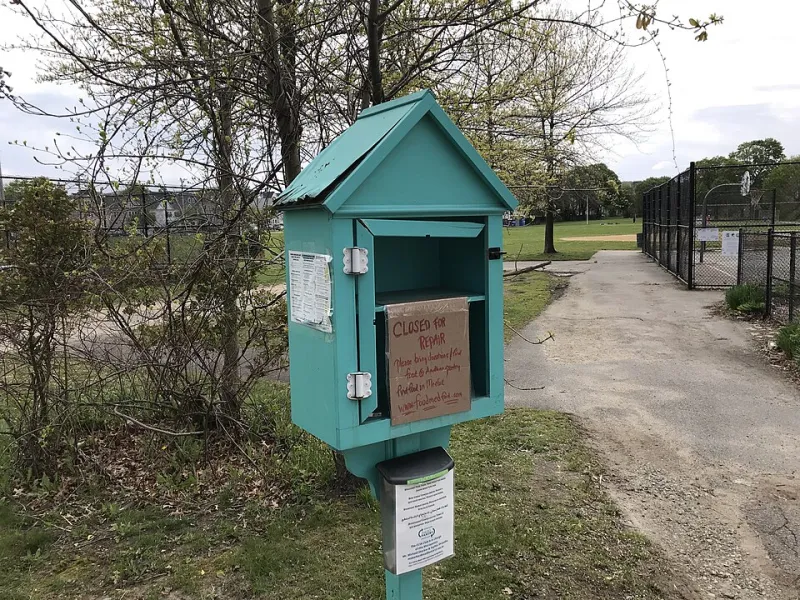
Photo: John Phelan, CC BY-SA 4.0, via Wikimedia Commons
A Box With a Job
The pantry on Maple Street is not much to look at. It is a wooden box on a post, painted a slightly wrong shade of green, with a glass door that sticks in humid weather. Inside, there are cans of beans, boxes of pasta, peanut butter, shelf-stable milk, and a plastic bin of granola bars. A small laminated sign reads: Take what you need. Leave what you can. No questions.
It started in the spring of 2020 as a stopgap. A few neighbors were worried about people who couldn't get to the store, and a box on a post seemed like a small, low-effort fix. Six years later, it is still there, and it has become something closer to a neighborhood institution. There is a rotation. There is a waiting list. There is a person who quietly checks the expiration dates on Tuesday mornings.
The twist is the waiting list. It is not for people who need food. It is for people who want to donate.
The Rotation
The pantry has room for about three days of shelf-stable food at a time. It also has a small volunteer crew that keeps it clean, stocked, and pest-free. That crew has a capacity — maybe eight active households, maybe ten in a good month — and a schedule. Each household takes one week. They wipe down the shelves, rotate the older items to the front, toss anything expired or damaged, and restock from a shared list of staples.
More than twenty households have asked to be added to the rotation. Some are long-timers who have been giving since the box went up. Some are new to the street and want to meet people. Some are looking for a way to help that doesn't involve writing a check or attending a meeting. The coordinator — a retired schoolteacher named Dana who asked that her last name stay out of it — keeps a paper list in a kitchen drawer. When a slot opens, she calls the next person.
The waiting list is not a problem. It is a luxury, and it is also a logistics puzzle. A pantry can only absorb so much generosity before it becomes a dumping ground. Too many cans of creamed corn, too many expired boxes of couscous, too many people who mean well but do not want to be told that the pantry does not need another jar of pickles. The rotation solves that. It gives the pantry just enough help and gives would-be helpers a clear job.
Dignity by Design
The signs are careful. There is no language about the needy, the hungry, or the less fortunate. There is no sign-in sheet. There is no camera. There is no volunteer parked next to the box asking questions. The pantry is open twenty-four hours a day, and anyone can use it.
That is not an accident. The volunteers learned early that the fastest way to make a pantry fail is to make people feel watched. A woman who used the box for three months after a layoff later told Dana that she kept walking past it at first because she was sure someone would ask what she was doing. When nobody did, she took a box of pasta. Then a can of tomatoes. Then she started leaving a few things when she could. That is the whole model: low barrier, low drama, high trust.
The volunteers also keep the box tidy. This sounds small, but it matters. A pantry that looks like a rummage sale attracts the wrong kind of donations — half-empty boxes, opened packages, clothing, random cans without labels. A pantry that looks like a small, orderly grocery store tells people that this is a place meant to be used, not a place to drop off guilt.
When Generosity Outpaces Need
The waiting list for donors raises an interesting question: what happens when a community wants to give more than the system can handle? The answer, at least on Maple Street, is that you build a system. The rotation is not just a way to manage food. It is a way to manage energy. Neighbors who want to help are told exactly how to help, and that makes them more likely to keep helping.
It also means the pantry is not dependent on one person's garage. The food comes from a weekly buy at a discount grocer, from neighbors' gardens in summer, from a church group that collects peanut butter, and from the occasional anonymous bag left on the post. The volunteers do not accept expired food. They do not accept clothing. They do not accept anything that requires a refrigerator or a stovetop. The rules are boring, and that is why the pantry works.
There is no grand lesson here. It is a box on a post. But it is also a small model for how a neighborhood can take care of itself without making a production of it. The waiting list is not a sign that the pantry is too popular. It is a sign that people want to be part of something that asks them to show up, not just write a check.
If you walk past Maple Street on a Tuesday morning, you might see Dana with a rag and a clipboard. She will not ask you to sign anything. She might ask if you want to be added to the list. There is room, eventually. There is always a box to wipe down.