Thirty Years at the Register: What Ray Knows That the Rest of Us Forgot
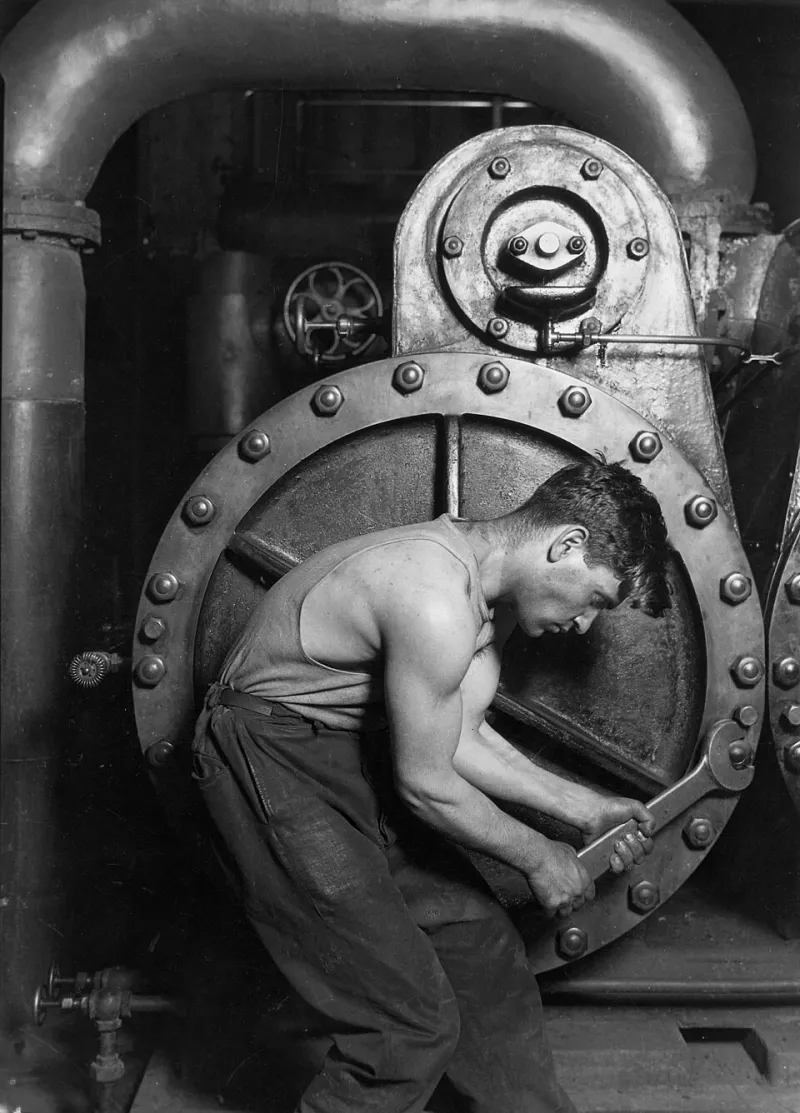
Photo: Lewis Hine, Public domain, via Wikimedia Commons
Ray has written my license plate number wrong for eleven years. Every time I pull into the Splash & Shine on Route 9, he squints at my bumper, keys something into the register, and gets the last two digits transposed. I've stopped correcting him. Correcting him would break the ritual.
That's the thing about people like Ray — you don't go to them for efficiency. You go to them because they're the last thread connecting you to a version of your neighborhood that still had a memory.
The Man Behind the Torn Window Decal
Ray Vasquez, 61, has worked the register at Splash & Shine since the spring of 1994. The building has changed hands twice. The price of a basic wash has gone from $4.50 to $18. The vacuum bay still has a dent from a truck that jumped the curb during the 2008 ice storm — Ray saw the whole thing happen.
He estimates he's run about 400,000 cars through the tunnel. He doesn't count the people, though. "You don't count people," he told me, waving a rag at me like I'd asked a dumb question. Which I had.
What he does instead is something closer to bookkeeping of the soul. He knows that the woman in the silver Camry — 9:15 every Saturday, exact change — lost her husband two winters ago and still brings his car. He knows the kid who mows the Hendersons' lawn saves up for the deluxe wash with the undercarriage spray. He knows which contractors' trucks come through on Fridays and which ones are "going through something" when they skip a week.
The Micro-Ledger of a Neighborhood
We don't have a word for what Ray does. "Cashier" undersells it. "Community pillar" over-romanticizes it and makes it sound like a plaque. What Ray is, really, is a ledger. A running record of small, unremarkable facts that nobody else is tracking.
Sociologists call these "weak ties" — the relationships that aren't close enough to be friendship but are too frequent to be nothing. Research going back decades suggests these ties do quiet, heavy lifting: they're how people hear about jobs, how neighborhoods hold together after a storm, how a stranger on the corner stops feeling like a stranger.
Ray's version of weak-tie maintenance is simple. He remembers. That's it. He remembers your car, your usual, your kid's soccer season. In an economy where the person at the register changes every four months and the register itself keeps asking you to tap a screen instead, being remembered has become a luxury good.
The Ray Census
Once I started looking, I found Rays everywhere. The woman at the dry cleaner on Delancey who knows to check the left pocket of my husband's work shirts because he "keeps forgetting" his receipts. The guy at the hardware store who has opinions — strong ones — about which garden hose actually survives a Midwest winter. The barber who's been cutting the same man's hair since the man had hair worth cutting.
Every one of them said some version of the same thing when I asked why they stayed: "Somebody's got to."
That's not a job description. That's a covenant. And the wild part is that most of these people aren't paid for the part we actually value. Ray's hourly wage doesn't include a line item for remembering whose daughter just got into nursing school.
What We Lose When the Counter Turns Over
Here's the uncomfortable math. The median tenure at a retail job in this country is measured in months, not decades. Every time a Ray retires and isn't replaced — and they mostly aren't replaced — a neighborhood loses a chunk of its unrecorded history. Nobody archives it. It just evaporates, one forgotten license plate at a time.
We notice it the way you notice a draft. The transaction still works. The car still gets washed. But something has gone out of the room — the sense that this place is held by a person rather than staffed by a rotation.
Go Thank One
Before I left, I asked Ray if he ever thought about doing anything else. He looked at me like I'd asked if he'd ever considered taking up residence on the moon.
"People come here mad," he said. "Bad day, rain, kids screaming in the back seat. Fifteen minutes later they drive out in a clean car. How many jobs let you fix somebody's day and never even have to talk about it?"
So here's my assignment for you: think of the Ray in your orbit. The counter person who's been there longer than your kids. The one who gets your order wrong in the same lovable way every time. Go say something. Not a big speech — just an acknowledgment that you've noticed.
Because the people who hold our neighborhoods together almost never know they're doing it. The least we can do is tell them before the register finally goes dark.