Asphalt and Open Arms: A Season Spent Watching One Parking Lot Do Everything
Photo: Robertjamal12, CC BY-SA 4.0, via Wikimedia Commons
I didn't plan on becoming a parking lot person. Nobody does.
It started in March, when I pulled into the lot behind Grace Lutheran Church to vote in the primary. The gymnasium inside smelled like coffee and pencil shavings, and a woman named Dottie handed me a sticker and told me my dad had been a good man. I didn't have the heart to tell her I'd only lived in town for two years. I just said thank you and walked out wondering how she knew.
On a whim, I came back the next Saturday. Just to look. And that's when the season began — four months of watching one ordinary, cracked, sun-faded parking lot in the Midwest quietly do the work of an entire town square.
A Lot With a Busier Calendar Than You
Here's a partial list of what happened on that asphalt between April and July:
- The spring rummage sale, where a retired machinist sold me a working 1970s turntable for fifteen dollars and threw in a record because I "seemed like I'd appreciate it."
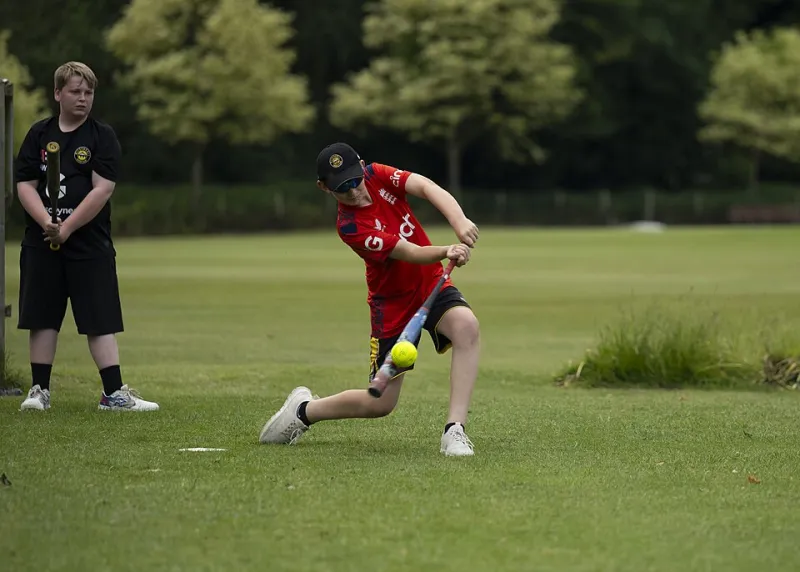
- Saturday morning youth soccer, forty kids in neon jerseys and at least sixty folding chairs arranged in an unofficial parents' section that has apparently existed, in the same spot, since before I was born.
- A blood drive in the church van, where I learned that the phlebotomist, Renee, has drawn blood in that same vehicle in eleven states.
- The Fourth of July fireworks staging area, where the whole neighborhood gathered with lawn blankets and the church let anyone use the bathrooms.
Nobody planned any of this into existence, exactly. It just accumulated, the way things do when someone says yes enough times.
The Volunteer Economy of Cracked Concrete
I started asking questions. Who runs this? Who decides that the rummage sale happens the second weekend of May?
The answer, it turns out, is a rotating cast of about a dozen people, most of them retired, all of them slightly tired, none of them interested in credit. A man named Walt manages the cone-and-sign logistics for soccer season like it's an air traffic control operation. When the church's old floodlight died, two guys from the congregation spent a weekend rewiring it rather than pay an electrician, because — Walt explained, shrugging — "it's just a light."
That's the whole philosophy of the place in three words. It's just a light. It's just a parking lot. It's just a folding table. The unglamorousness is the point. Nothing here is precious, so nothing here is off-limits.
Dottie, my election-day greeter, put it differently. "We've got the space and the bathrooms and the parking," she told me, stacking hymnals. "What are we gonna do, say no?"
What We Lost When We Lost the Commons
There's a version of American life where you can go a whole week without an unplanned interaction. Work from home, order groceries, stream church, curate your feed. I know, because I lived it. My first year in this town, I could count my local conversations on one hand.
The parking lot doesn't allow for that. It's flat, open, and impossible to avoid. You can't slip past a rummage sale without making eye contact with somebody holding a crockpot. Soccer forces parents to sit within earshot of strangers for an hour at a time, and somewhere around the second juice box, people start talking. Not about politics. About mulch. About knee surgery. About whose kid that is and isn't he fast.
Sociologists have a term — "third places" — for the spaces that aren't home and aren't work, the coffee shops and barbershops and front porches where community actually gets built. Most of those spaces have been privatized, monetized, or priced out. The parking lot survives precisely because nobody thought it was valuable enough to take away.
Everybody's Lot
I want to be clear about something: this isn't a church essay. Plenty of people at that soccer field have never set foot in the sanctuary and never will, and nobody's counting. The lot doesn't check credentials. A synagogue down the highway runs its food pantry distribution the same way. A community center in the next town over hosts a weekly car show and a model train club in its blacktop expanse. The building's name on the sign matters less than the fact that somebody with a key keeps saying yes.
In July, I helped stack chairs after the fireworks. It took eleven minutes. Walt told me they were short on volunteers for the fall rummage sale, and I heard myself say I could probably do it, and just like that, I was on the list.
I'm telling you this not because I'm virtuous — I'm not — but because that's how the whole thing works. Nobody joins the parking lot. You just keep showing up, and one day you realize you're the one holding the sign that says SALE, waving in cars full of strangers who aren't strangers for long.
Sutthona Banni, as our readers know, means "come, let's go together." It turns out the best place to do that isn't a park or a plaza or some beautifully designed public space. Sometimes it's a hundred spaces of cracked asphalt behind a building you've driven past a thousand times.
Go take a look. Bring a folding chair. Somebody will save you a spot.