Chai, Crowded Platforms, and the Strangers Who Took Care of Me
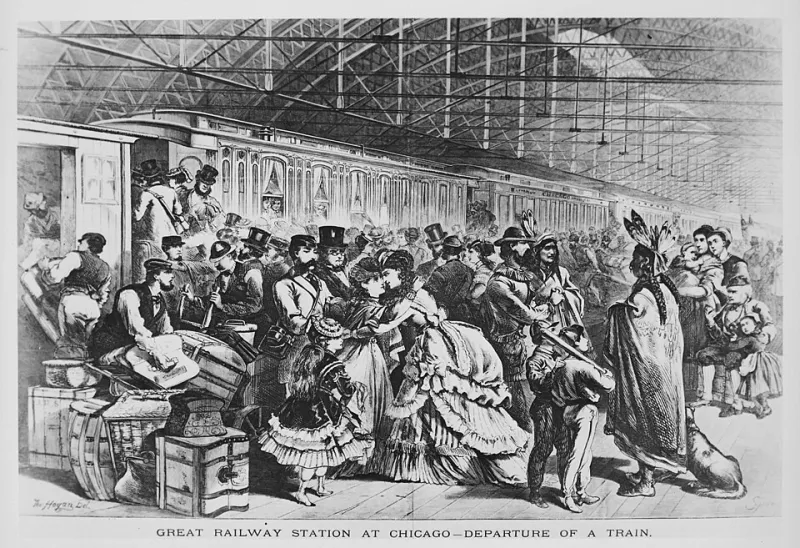
Photo: Unknown authorUnknown author or not provided, Public domain, via Wikimedia Commons
The train was four hours late. This is not a complaint — in Indian Railways, a four-hour delay is practically punctual — but it did mean I'd be spending half a day on a platform in central India with a backpack, a dead phone battery, and no plan.
What happened next is the kind of thing that's hard to explain to someone who hasn't stood in a crowded Indian train station. A family noticed me looking lost and made room on their spread-out newspaper. A man selling chai refused my money the second time I tried to pay. A college student, sensing I couldn't read the departure board, simply started narrating it to me in English without being asked. By the time my train finally arrived, I'd shared snacks, held a sleeping baby while a mother chased her older kid, and been given extremely firm advice about which window seat to fight for.
Nobody introduced themselves. Nobody expected a follow-up. It was cooperation as a kind of weather — just in the air.
I think about that platform a lot now, back in the US, standing in airport security lines and coffee shop queues where eye contact is a violation of the social contract. Not because Americans are cold — we're not, we'll absolutely help you when asked — but because we've built so many small rules that make helping unasked feel intrusive. So here's what that train station taught me, translated for everyday American life.
1. Waiting Together Is Better Than Waiting Apart
At the station, waiting was a group activity by default. Here, waiting is a solo activity we perform in the same room as other people. But the opportunities are everywhere: the doctor's office, the delayed flight gate, the DMV. I've started offering a simple "brutal, right?" to whoever's next to me in a long line. It's a two-second interaction, and roughly half the time it turns into an actual conversation.
2. Share Food Without Being Asked
The chai vendor, the family passing around a tiffin, the auntie who pressed biscuits into my hand — food was the station's social currency. In the US, we've pathologized sharing. But there's a version that works: buying the coffee for the coworker who's clearly having a morning, offering gum on a delayed flight, bringing extra cookies to the pickup line. Small, no-strings, no receipt required.
3. Notice Who Looks Lost — Then Just Help
The student who narrated the departure board didn't ask "do you need help?" He read the situation and acted. There's a lesson there for places like grocery stores and transit stations back home, where we've decided that unsolicited help is rude. It isn't, if you keep it light. "That self-checkout will fight you — want me to scan those?" has made me two grocery-store friends.
4. Hold the Seat. Watch the Bag. Take the Shift.
At the station, people watched each other's luggage and saved spots without ceremony. It was understood: if we're all stuck here, we're all responsible for each other. The American version exists — think of the parent who takes a shift watching the group's kids at the playground — but we could do it more, in smaller doses. Holding a spot in line while someone runs to grab their wallet. Watching the stranger's suitcase while they grab a coffee. Tiny custodianship, freely given.
5. Goodbyes Don't Need Follow-Up
This one took me longest to understand. When my train pulled in, my platform family helped shove my bag aboard, waved, and were gone. No numbers exchanged, no "we should get coffee." The kindness was complete in itself. Back home, we often hesitate to help because we fear the obligation it creates. The train station taught me that a favor can be a gift with no invoice attached — and that this makes it easier to give, and easier to receive.
I won't pretend my morning commute now looks like an Indian railway platform. But I've noticed something shift. When I treat waiting rooms and checkout lines as places where temporary community is possible — instead of places to endure — the days get lighter. The site I write for is called Sutthona Banni, which in Kannada means "keep coming back." That's the whole spirit of it, isn't it? Show up, again and again, in the same places as other people, until strangers start to feel like neighbors.
The train was late. The platform was crowded. It remains one of the best days of community I've ever had.