Whatever Happened to Sitting Outside? Reclaiming the Front Porch in a Drive-Thru World
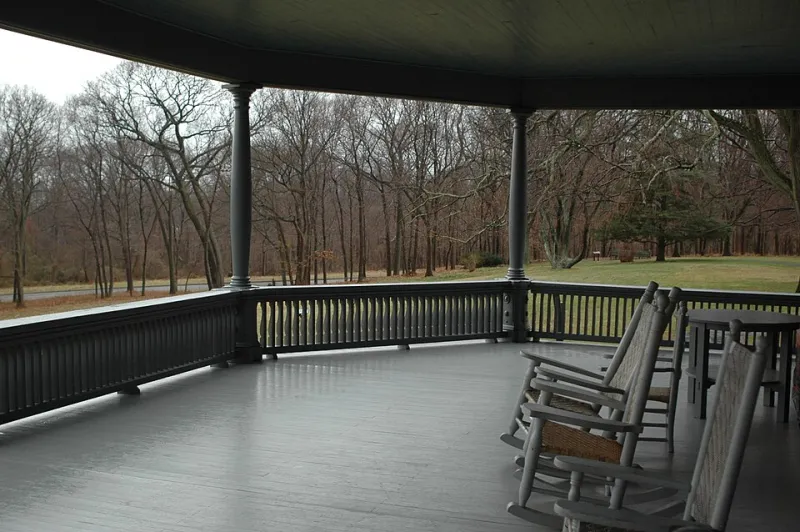
Photo: Department of the Interior. U.S. Fish and Wildlife Service. National Conservation Training Center. 10/1997-8888, Public domain, via Wikimedia Commons
There's a photograph in my family's album that gets pulled out every Thanksgiving: my great-grandparents on the porch of their bungalow in Dayton, Ohio, sometime in the 1950s. My great-grandfather is in a folding chair with a paper cup of coffee. My great-grandmother is shelling peas into a bowl on her lap. A neighbor kid is on the steps, mid-laugh. Nobody in that photo is performing anything. They're just... outside, together, because that's where people were.
If you drive through most American suburbs today, that scene is nearly extinct. And I don't think it's because we stopped wanting it.
The Porch Didn't Die of Natural Causes
The front porch was never just architecture. It was a social technology. Before phones, before doorbell cameras, the porch was how you knew what was happening on your street — who was sick, who had a new baby, whose teenager got into college. It was a soft, low-stakes interface between private life and public life. You could wave. You could chat for two minutes or twenty. You could simply be visible.
Then, one by one, the supports underneath it gave way.
Air conditioning arrived and made the indoors comfortable in July. Television gave everyone a reason to stay in. The automobile reshaped neighborhoods around garages and driveways, so the first thing your house said to the street became "cars live here" instead of "people live here." And postwar zoning — with its love of big setbacks, cul-de-sacs, and single-use subdivisions — quietly engineered spontaneity out of the neighborhood. Nobody walks past a cul-de-sac. There's nothing to walk to.
Historians of American housing point to mid-century as the turning point, when the porch was replaced by the patio in the back — a private room outdoors, hidden from view. We didn't stop gathering. We just stopped doing it where anyone could join.
What We Actually Lost
It's easy to romanticize. Porches didn't fix poverty or racism or loneliness, and some people absolutely wanted nothing to do with their neighbors. But it's worth naming what disappeared, because it wasn't nostalgia — it was function.
Informal neighborhood watch. Jane Jacobs famously argued that a street watched by people who belong on it is safer than one watched by cameras. A porch is presence. A person rocking in a chair with a book is doing more for street safety than any sign that says so.
Low-stakes friendship. Psychologists who study loneliness talk about "weak ties" — the casual acquaintances who make up most of our daily social contact. Weak ties are built through repetition and proximity, exactly what a porch generates and exactly what a garage-to-office commute eliminates.
A front-row seat to your own neighborhood. Kids selling lemonade. The guy who walks his dog at 6 p.m. sharp. The season's first fireflies. When you experience your street only through the windshield, you don't really live there — you just sleep there.
The People Bringing It Back
Here's the hopeful part: the porch is having a quiet revival, and it's being led by regular homeowners, not architects.
In New Urbanist developments like Seaside, Florida — and in infill neighborhoods in places like Charlotte, Minneapolis, and Portland — new homes are being built with porches pulled up close to the sidewalk, porches wide enough for actual chairs. Municipalities are rewriting setback rules that made porches impractical. And in older neighborhoods, the renovation trend has shifted: people are tearing off faux-colonial facades and adding back deep, shaded front verandas.
I talked with a woman in Georgia who put a porch on a house that never had one. Her first month out there, she met more neighbors than she had in the previous six years. "It turns out," she told me, "if you sit in front of your house, your house starts having a relationship with the street." That's not a design principle. That's a life principle.
Five Small Ways to Porch-ify Your Life
You don't need a new house. You need a chair and a habit.
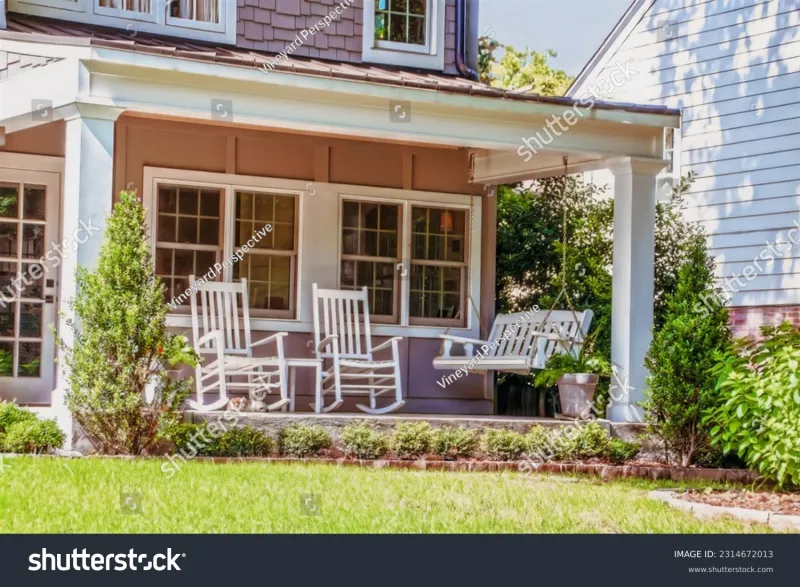
- Put furniture in front, not just back. A bench, two chairs, anything that signals "you can stop here."
- Keep a drink in hand. It sounds silly, but holding a coffee is the universal signal that you're not busy.
- Wave first. Someone has to break the seal. Be the person who does it.
- Learn the walk-by schedule. Every street has its regulars. Greet them by name by the third time.
- Stay out even when it's boring. The whole point is that something might happen. Usually something small does.
The front porch didn't vanish because we stopped needing it. It vanished because we stopped building for it. Which means it can come back the same way — one chair, one evening, one wave at a time. My great-grandparents would recognize the move immediately.