Short Stack, Long Memory: Four Decades of Sundays at the Firehouse
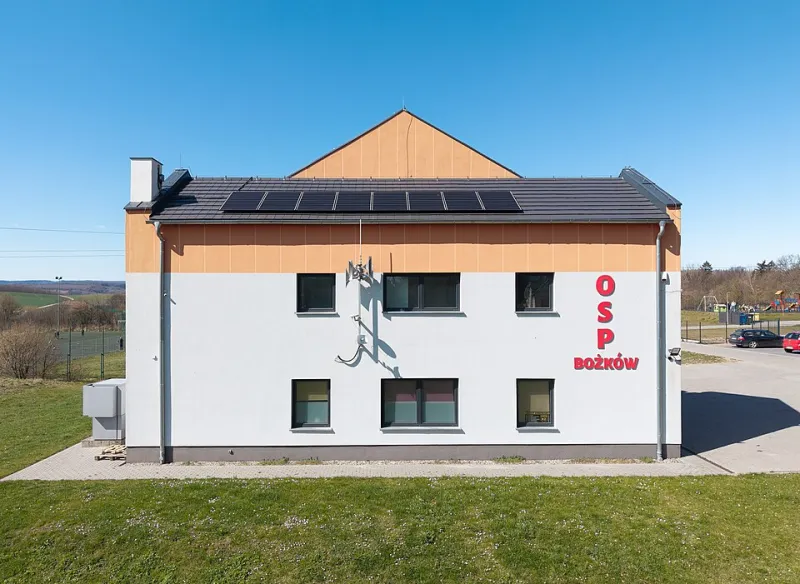
Photo: Jacek Halicki, CC BY-SA 4.0, via Wikimedia Commons
At 6:12 a.m. on a Sunday in November 2026, the bay doors at Station 3 are already up. The engines are still inside, but the space in front of them has been converted into a dining room: eight folding tables, forty-two chairs, a coffee station, and a griddle that has been in service since the Reagan administration.
The pancake breakfast at Station 3 has happened every Sunday since 1984. That is 42 years, or roughly 2,184 Sundays, depending on how you count the snow days. The volunteers do not count the snow days. They show up anyway.
The First Sunday
The breakfast started as a fundraiser for new turnout gear. The department needed $8,000. A group of volunteers decided to sell pancakes at $3 a plate. They made $412 the first Sunday and thought they had solved the problem. They had not. But they had started something.
The current chief, Marlene Ortiz, was not there in 1984. She joined the department in 1998 and became chief in 2019. She has heard the origin story enough times to recite it. 'They thought it would be a one-time thing,' she said. 'Then people kept showing up.'
The menu has not changed much. Pancakes, sausage, eggs, coffee, orange juice. The batter is made from a recipe that has been scaled up so many times the original index card is now a laminated sheet in a binder. The sausage is bought in bulk from a restaurant supply company. The eggs are scrambled in a roaster that lives in the kitchen and is cleaned every Sunday by whoever loses the coin toss.
The Batter Math
The batter is where the operation gets serious. For 300 people, the crew uses 45 pounds of flour, 12 gallons of buttermilk, 6 pounds of sugar, and a startling amount of baking powder. The recipe is written in a shorthand that only three people fully understand. One of them is Frank Delgado.
Frank is 78. He has been flipping pancakes at Station 3 since 1986. He has missed exactly zero batches in that time, by his own count, though his wife, Rosa, says he missed one Sunday in 1997 when he had the flu. Frank disputes this. 'I came in,' he says. 'I just didn't stay.'
Frank works the griddle with a rhythm that looks effortless and is not. He pours batter from a pitcher, waits for the bubbles, flips with a spatula that has been worn to a custom curve, and stacks the pancakes on a warm platter. He does not use a timer. He does not use a thermometer. He uses the sound of the batter hitting the griddle and the smell of the edges turning crisp.
'You learn the batter,' Frank said. 'You learn the day. If it's humid, you add a little flour. If it's cold, you let it sit longer. The recipe is a starting point.'
The Coffee Urn and the Chiefs
The coffee urn is older than most of the volunteers. It is a 60-cup stainless steel urn that has outlived four chiefs. It has a dent on one side from a folding table incident in 2003. It has been repaired twice. It is not allowed to be replaced.
'We tried to replace it in 2015,' Chief Ortiz said. 'The older guys staged a coup. It's a good urn. It just has a personality.'
The urn is filled at 6 a.m. and again at 8 a.m. The coffee is not fancy. It is the kind of coffee that tastes like it was made for people who have been awake since 5. The volunteers drink it from foam cups and argue about whether the department should buy a new pumper truck.
The Dishwashers Grow Up
The breakfast is staffed by a mix of current volunteers, retirees, and teenagers. The teenagers start as dishwashers. They stand at a three-compartment sink behind the engine bay, scraping plates and stacking them in racks. It is not glamorous. It is the kind of job that teaches you how to show up.
Rosa Delgado started as a dishwasher in 1992. She was 16. She met Frank's son at the breakfast, married him six years later, and now brings her own kids to help. Her daughter, Elena, is 14 and has been on dish duty since she was 12. Elena says the breakfast is 'the only place where I get to see my grandpa be famous.'
There are other stories like that. A volunteer named Marcus started as a dishwasher in 2008. He is now a paramedic. A woman named Beth started as a server in 2011. She is now the department's treasurer. The breakfast is not just a fundraiser. It is a pipeline.
What the Money Actually Does
The breakfast raises about $18,000 a year, according to Chief Ortiz. That is not enough to buy a new engine. It is enough to cover the small things that the budget does not: new hoses, training materials, a replacement thermal imaging camera, the annual Christmas party for the volunteers' kids.
The economics are not the point. The point is the sitting down. A whole town sits down together in a firehouse on a Sunday morning. There is no permit. There is no permit fee. There is no ticketing system. There is just a line, a plate, and a table where you might end up next to someone you have never met.
'People need a place to be together that isn't a restaurant or a church or a school,' Chief Ortiz said. 'This is that place. It's not fancy. It's pancakes. But it's ours.'
The Last Institution Without a Permit
The breakfast has never missed a Sunday. Not for snow. Not for a hurricane. Not for the pandemic, when they switched to drive-through and handed out pancakes in foam containers. Frank was at the griddle then, too, wearing a mask and a pair of gloves.
On a Sunday in November 2026, the line stretched out the bay door and onto the apron. Frank was at the griddle. Elena was at the sink. The coffee urn was dented and full. A kid in a fire department T-shirt was carrying a tray of sausage. The chief was refilling the syrup.
It is not a grand institution. It is a griddle, a recipe, and a group of people who keep showing up. But it is the kind of thing that holds a town together, one short stack at a time.