Where the Clock Runs Backward: Finding Family at the Counter of a 24-Hour Diner
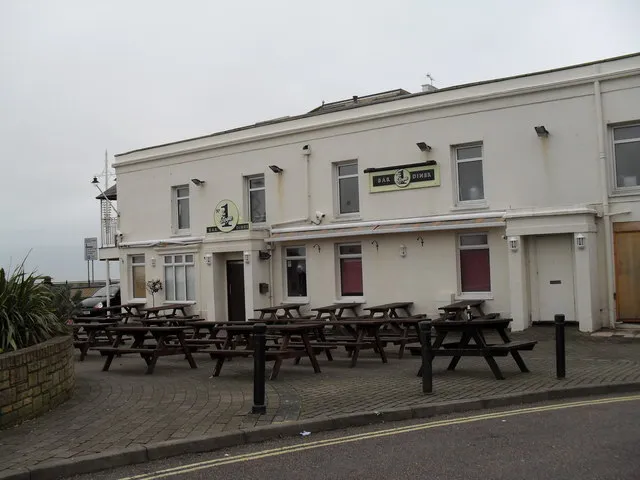
Photo: Basher Eyre , CC BY-SA 2.0, via Wikimedia Commons
There's a particular kind of loneliness that only shows up at 3 a.m. It's not the dramatic kind. Nobody's crying into a whiskey glass in real life the way they do in movies. It's quieter than that — the hum of the refrigerator, the blue light of a phone that has nothing left to show you, the strange arithmetic of knowing exactly how many hours until sunrise.
For the past year, on the nights sleep decided to skip me entirely, I've been driving to the Starlite Diner on Route 9. Not for the food, though the food is honest and hot and arrives fast. I go because at 3 a.m., that place is the closest thing my town has to a lit window in the dark.
The Republic of the Sleepless
Walk into any 24-hour spot past midnight and you'll notice it immediately: the population is different. There's the nurse twelve hours into a double, still in scrubs, eating scrambled eggs like it's her reward for surviving. There's the long-haul trucker parked out back, drinking coffee slowly enough to make it last until his mandatory break ends. A kid who just got off a shift at the distribution center. A traveler between flights. Me, the insomniac, who the staff has stopped asking questions about.
We don't have much in common during daylight hours. But at this hour, we're citizens of the same small country — the republic of the sleepless — and the rules of citizenship are simple. You keep your voice down. You respect the booth. You don't make anyone's night harder than it already is.
And then, somehow, it goes further than simple politeness.
Darlene Knows My Order, and Other Small Miracles
Darlene has worked the graveyard shift at the Starlite for eleven years. She knows my coffee order. She knows I take the corner booth. She knows when I've had a bad week before I've said a single word, because apparently insomnia has a posture.
"Rough one?" she'll ask, and slide the water glass over before I answer.
That's it. That's the whole exchange. And somehow it's more than I get from most people I've known for years.
I watched her do the same thing for the truck driver last month when his company lost a contract and he found out over the phone, alone, in a vinyl booth at 2:40 in the morning. She didn't hover. She just refilled his coffee three extra times and, when he finally got up to leave, told him the pie was on the house. He tried to argue. She won. She always wins.
Nobody at that diner is performing kindness for an audience. There is no audience at 3 a.m. That's exactly why it's real.
The People Who Keep the Lights On
Here's something I've come to believe after a year of these nights: the country we think of as "paused" between midnight and dawn isn't paused at all. It's just being held up by a workforce most of us never see. Hospital cafeterias feeding third-shift surgeons. Gas station attendants watching over empty highways. Dispatchers, bakers, stockers, security guards — the invisible skeleton crew of ordinary American life.
And the remarkable thing is how much warmth they generate on the way. The overnight crew at the Shell station on Fifth knows the cab drivers by name. The hospital cafeteria worker who slips extra rolls onto the tray of the resident who looks like she hasn't eaten since yesterday. These aren't grand gestures. They're small, repeated acts of showing up — the kind that never make the news but hold entire neighborhoods together anyway.
What the Night Shift Knows That We Don't
I think the rest of us could learn something from the 3 a.m. code, and it boils down to three things.
First: presence beats solutions. Nobody at the Starlite tries to fix the trucker's job loss or my sleepless streak. They just stay nearby and keep the coffee coming. Most of the time, that's what people actually need.
Second: consistency is its own kind of love. Darlene showing up for eleven years of graveyard shifts isn't glamorous. But because she's consistent, an entire floating population of strangers has somewhere to land. Reliability, it turns out, is a gift.
Third: you don't need to know someone's whole story to be kind to them. The diner operates on partial information. Names half-remembered, orders memorized, lives glimpsed in fragments. And it works.
Sunrise, Eventually
The other morning I stayed long enough to watch the sky turn gray, then pink, through the diner's foggy windows. The night crew started handing things off to the day shift — a clipboard, a few jokes, a rundown of who needed what. Darlene untied her apron and headed for her car, off to a daytime life I know almost nothing about.
I realized I'd never seen her in the sun. And yet she'd been one of the steadiest, kindest people in my life this past year.
If there's a lesson in all of this, it's that community doesn't always look like a block party or a club with a membership list. Sometimes it's a corner booth, a bottomless cup, and a woman named Darlene who notices when your shoulders are carrying more than usual. The sun came up, like it does. I paid my tab, tipped too much, and drove home. And I slept — finally — knowing the lights on Route 9 would still be on the next time I needed them.