Leashes After Dark: What the 10 P.M. Crowd Knows That the Group Chat Doesn't
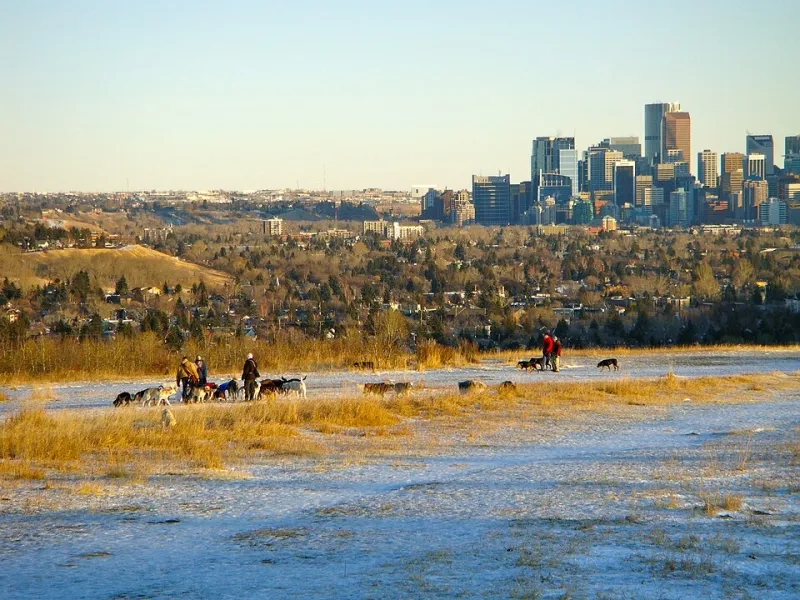
Photo: JMacPherson from Calgary, Canada, CC BY 2.0, via Wikimedia Commons
The Nod at the Corner
At 10:03 on a Tuesday, a woman in a puffer vest and a corgi named Biscuit turns the corner onto Sycamore. She does not check her phone. She checks the sidewalk. Half a block ahead, a man with a rescue pit mix called Otis lifts two fingers off the leash handle. That is the whole greeting. No names. No small talk. Just the nod.
If you live on a street with a 10 p.m. dog walker, you have probably seen this without recognizing it. It looks like nothing. It is actually a piece of social infrastructure — a loose, unpaid, entirely unofficial system that runs on repetition, leash length, and the shared understanding that nobody wants to be the person shining a flashlight into someone else's yard.
The 10 p.m. crowd is not a club. There is no group chat, no roster, no dues. There is a woman who walks a pair of elderly dachshunds at 9:45. There is a guy who runs with a Labrador at 10:15, which is show-off behavior but tolerated. There is the teenager with the foster dog that changes every few weeks, which makes him the neighborhood's most unpredictable variable. They know each other by dog: Biscuit's mom, Otis's dad, the dachshund lady. Human names are optional and often arrive months late.
The Rules Nobody Wrote Down
The rules are simple and mostly about not being a problem. Carry extra bags. Curb your dog when someone approaches. Keep your leash short at the blind driveway near the corner. If you see a car idling with its lights off, do not confront it — just make a note and mention it to the next person you see. If you see a package on a porch after dark, move it behind the planter if you know the neighbor, or leave it if you don't. Do not stop in the middle of the sidewalk to tell a long story. The walk is the point.
There is also the flashlight rule. A quick sweep is fine. A sustained beam into a living room window is not. Everyone has accidentally done it once. Everyone has been forgiven. The 10 p.m. walkers are a forgiving bunch because they all understand that the first year of dog ownership is a series of small public humiliations.
The information network is the real magic. In a neighborhood without a group chat, news travels at leash speed. The streetlight on the north end is out again. The Johnsons are having a tree removed Thursday, so expect a chipper. Someone's garage door was open at 11, and someone else closed it. A loose husky was seen near the cul-de-sac, and three people independently tried to catch it before the owner showed up with a treat bag and an apology.
None of this is dramatic. That is the point. The 10 p.m. walkers are not a neighborhood watch. They are something quieter: a pattern of presence. A person walking a dog at the same time every night is a small, repeated signal that the street is still inhabited, still watched, still worth paying attention to.
The Safety Thing
Ask anyone who walks late and they will tell you the same thing: the walk is for the dog, but it is also for them. The streets are different after dark. They are quieter and a little more honest. You notice the houses where the porch light is always on and the ones where it never is. You notice the cars that belong and the ones that do not. You notice the raccoon that has decided the recycling bin is a personal buffet.
The 10 p.m. fraternity — and it is a fraternity in the old sense, meaning anyone who shows up — creates a low-grade trust. You do not know these people's politics or their last names or what they do for a living. You know that they will nod. You know that if you trip on a root, someone will ask if you're okay. You know that if a dog gets loose, three people will be on it before the owner finishes shouting.
That is not nothing. In a country where we have built entire industries around avoiding each other, a nightly nod is a small act of repair. It says: I see you. I am not asking anything of you. I will be here tomorrow.
The Season Changes
The 10 p.m. crowd shrinks in January and swells in June. The winter walkers are the hard core — the ones who own headlamps and insulated boots and have opinions about salt. They know which sidewalks get icy first and which houses never shovel. The summer walkers are casual, out in shorts, letting their dogs sniff every mailbox like they are reading the day's newspaper.
But the rhythm holds. Ten o'clock. The same corners. The same nods. The dogs get older. New puppies arrive. The teenager's foster dog finally gets adopted, and for a week the corner feels empty. Then there is a new foster, smaller and louder, and the network recalibrates.
If you want to join, you do not need an invitation. You just need a leash and a reasonable sense of timing. Walk at the same hour for a week. Nod at the people who nod at you. Pick up after your dog. Do not shine your flashlight in anyone's window. Congratulations: you are in.
There is no group chat. There is no newsletter. There is just the street after dark, a few dogs, and the quiet agreement that we are all out here together.