The Brightest House on the Block Has a Spreadsheet and a Complaint File
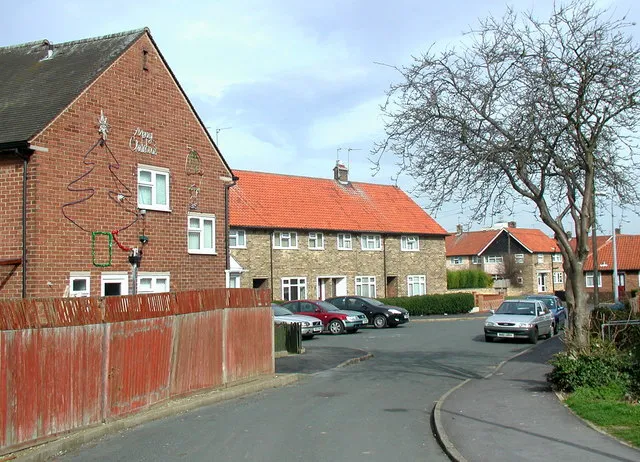
Photo: Paul Glazzard, CC BY-SA 2.0, via Wikimedia Commons
On the first Friday of December 2026, the cul-de-sac on Willow Bend slows to a crawl around 5:40 p.m. It is not an accident. It is the lights.
Ray Kowalski's split-level has been the brightest house on the street since 1998, when he strung three strands of icicle lights along the gutter and a plastic Santa on the lawn. Twenty-eight years later, the display has grown into something closer to infrastructure than decoration: roughly 40,000 bulbs, 62 extension cords, 31 plastic storage bins, and a laminated binder that Ray calls the December Plan.
When the Cul-de-Sac Becomes a Destination
The display starts the Saturday after Thanksgiving and runs through the first week of January. By 6 p.m., cars are lined up along both curbs. Minivans with kids in pajamas. Pickup trucks with dogs. A surprising number of adults who come alone, park, and sit for ten minutes with the engine running. The traffic is not a secret. The neighborhood association has discussed it. The city has not been called, mostly because Ray's display does not block a fire lane and the cul-de-sac has a natural turnaround.
The lights themselves are not subtle. There is a 20-foot inflatable snowman, a roofline outline in warm white, a fence line in red and green, and a front yard that looks like a circuit board designed by a cheerful engineer. The music is broadcast on a low-power FM signal, which means visitors can tune their radios to 88.7 and hear a playlist that Ray updates every year. This year's playlist includes Mariah Carey, Vince Guaraldi, and one song by a local high school choir that Ray recorded himself.
'People think it's chaotic,' Ray said in early December 2026, standing in his garage in a fleece jacket. 'It's not chaotic. It's scheduled.'
Forty Thousand Bulbs, Give or Take a Box
The numbers matter because the numbers are the story. Ray keeps a spreadsheet with tabs for circuits, load, inventory, and weather. He switched to LED bulbs in 2016 after his December electric bill hit $340. This year, the extra power for the display will add about $210 to his bill, even with LEDs, because 40,000 bulbs still add up.
The setup takes three weekends. Ray starts with the roof, because the roof is the part he refuses to do alone. His neighbor Dave Tran, a licensed electrician, handles the power draw. Dave does not charge for the consult. He does charge in cookies, specifically the ones Ray's wife, Ellen, makes in a quantity that Dave describes as 'medicinal.'
Dave's main job is to keep the display from tripping breakers or overloading circuits. The house has a 200-amp service. The display runs on 14 dedicated circuits, each with its own timer. Dave walks the perimeter with a multimeter and a clipboard, checking connections and looking for the kind of extension cord daisy chain that makes electricians wake up in a cold sweat.
'Ray is careful,' Dave said. 'He labels everything. He uses outdoor-rated cords. He does not overload. The only thing I worry about is the inflatable snowman, because inflatables and wind are not friends.'
The storage is its own operation. The 31 bins live in the attic from January to November. Ray has a map of the attic taped to the inside of the garage door. Each bin is numbered. Bin 7 is roof clips. Bin 12 is extension cords. Bin 19 is the replacement bulbs, which Ray buys in packs of 100 because he has learned that no display is ever fully done.
Two Households, One Complaint
Not everyone on Willow Bend loves the display. Two households are enthusiastic. One household is neutral. One household files a complaint every year.
The complaint is always the same: traffic, headlights, and the sound of car doors at 9 p.m. The complainant, who asked not to be named, has lived on the street since the 1980s and says the display has turned a quiet cul-de-sac into a tourist attraction. Ray has heard the complaint for years. He has responded by adding a sign at the entrance asking visitors to keep their radios low, not block driveways, and leave by 9:30 p.m. He has also invited the complainant over for coffee. The invitation has been declined every year.
'It's not personal,' Ray said. 'It's a cul-de-sac. Some people want quiet. I get it. But I also think there's a way to do this that respects the street.'
The two enthusiastic households are the ones with young kids. One family has a child who calls the display 'Ray's castle.' The other household brings out a thermos of cocoa on the first night of the display and hands out candy canes. The neutral household is neutral because they are snowbirds and miss most of December.
The Minivan Parade
The visitors are the part Ray did not plan for. In the early 2000s, a few cars would slow down. By 2010, it was a steady stream. By 2026, there are nights when the cul-de-sac has a genuine traffic jam of minivans, and the neighborhood has developed an informal choreography: visitors pull in, loop slowly, pull out. Nobody honks. Most people turn off their headlights when they stop.
Ray has noticed the kids who come back as adults. A few years ago, a woman in her twenties knocked on his door and told him she had come to the display every year as a child. She was now bringing her own daughter. Ray gave her a candy cane and a spot on the driveway. That is the part he talks about when the electric bill comes.
Etiquette for the Rest of Us Who Just Plug In a Wreath
Most of us are not Ray. Most of us have a wreath, a single strand of lights, and a timer that we forget to set. That is fine. The etiquette of being a normal December house is simple.
Do not try to compete with the house that has a spreadsheet. Your wreath is not in competition. It is in conversation.
Turn your lights off by 10 p.m. unless you have a reason. The neighbors will appreciate it, and the grid will too.
Do not block driveways when you visit a big display. Pull all the way over. Keep the radio low. Do not leave your engine running for twenty minutes while you take photos.
If you live near a display, talk to the person who runs it before you file a complaint. Most of them are more reasonable than you think, and some of them will turn down the music if you ask.
If you are the person with the big display, label your cords, respect the two-day rule of extension cords, and invite the complainer over for coffee. They might say no. The invitation still counts.
Ray's display is not a business. It is a hobby with a public-facing side. He does not sell tickets. He does not put out a donation box. He does not want to be famous. He wants the cul-de-sac to feel like a place where something happens in December. The spreadsheet, the complaint file, and the 31 bins are just the cost of making that happen.
On the second Saturday of December 2026, a minivan stopped in front of the house and a kid in the back seat pressed his face to the window. Ray was on the lawn, adjusting a timer. He waved. The kid waved back. The minivan pulled away. Ray went back to the spreadsheet.