Pushpins and Lost Cats: What the Corkboard at Delgado's Hardware Still Knows About Us
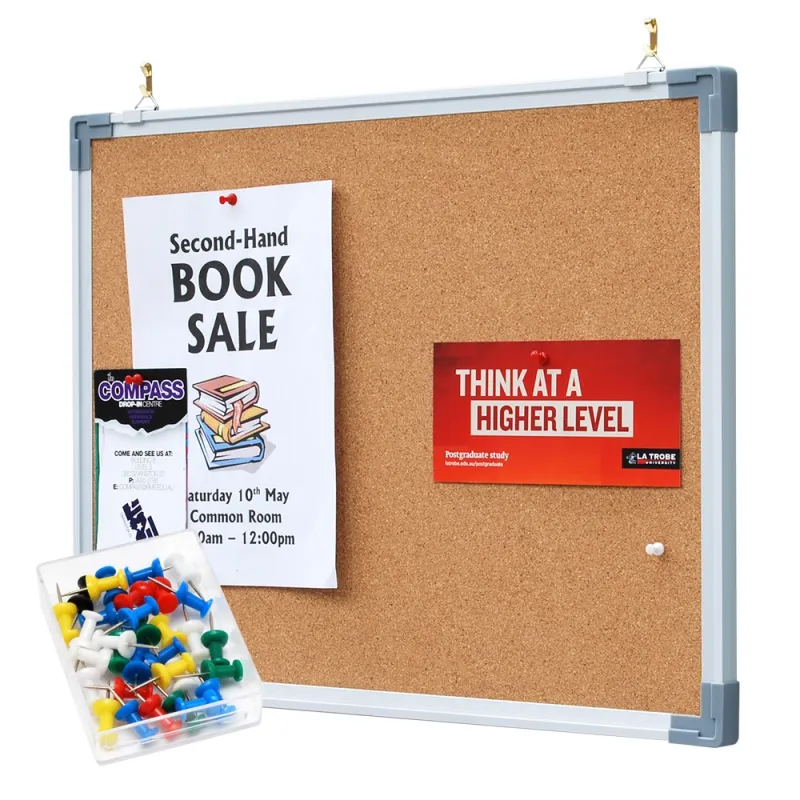
Photo: community corkboard with flyers and pushpins in local hardware store, via slimlinewarehouse.com.au
There's a corkboard in the back of Delgado's Hardware, wedged between a rack of paint rollers and the ancient key-cutting machine, that I've become quietly obsessed with.
It's maybe three feet wide, browned at the edges, and studded with so many pushpins that some flyers hang by a single hopeful tack. A lost cat named Biscuit. Guitar lessons from a guy named Trev. A card table for sale, a bassinet that's "seen one baby and survived," a handwritten plea for help moving a piano two blocks east.
Nobody moderates it. Nobody owns it. And yet it works better than anything on my phone.
The Feed That Doesn't Scroll
I started paying attention to the board last spring, when my garage door spring snapped and I posted on three different apps looking for a repair guy. I got two quotes, one scam, and an ad for a door company I'd already blacklisted.
Then I stopped at Delgado's for sandpaper and saw a index card, pinned slightly crooked: "Garage doors, springs, openers. Ask for Wally. 30 years in the neighborhood." Phone number, no website, no reviews.
Wally came the next morning. Fixed it in forty minutes. Charged me less than the app quotes and told me a story about the blizzard of '96 while he worked.
That's when it hit me: the corkboard is a feed, but it's a feed with consequences. Every post has a face behind it — usually literally, since half the flyers include a photo of the poster's kid, dog, or lawn. You can't be anonymously terrible on a corkboard. Your handwriting is right there. Your phone number is right there. Wally might fix your door, or he might fix your door and mention you at the church picnic.
The Curators You Never Knew You Needed
Every board like this has a cast, and Delgado's has a good one.
There's Marisol, who runs the register and informally governs the board. She takes down expired flyers — the rule, she told me, is "if it's older than the Super Bowl, it's trash" — and she has strong opinions about staples. "Staples rust," she said, sliding a pushpin across the counter to me like it was a sacred object. "Pins. Always pins."
There's the man — nobody knows his name, everyone calls him Flyer Guy — who posts a new ad for his window-washing business roughly every eleven days, always on the same teal paper. Marisol lets it slide. "He's consistent," she shrugs. "That's more than I can say for the piano people."
And there was Biscuit. Orange tabby, missing since October, flyer posted by a kid named Dylan who'd drawn the cat himself in marker. The flyer stayed up for six weeks. People stopped and looked at it. Someone added a sticky note: "Saw an orange cat near the laundromat on 5th!"
Biscuit came home in December. A woman three streets over had been feeding him under her porch. Dylan put up a new flyer — same marker cat, but this time with a hand-drawn party hat and the words "HE'S BACK. THANK YOU 5TH STREET."
Tell me the algorithm has ever produced anything that good.
Why the Analog Version Wins
Here's what I've come to believe: the corkboard succeeds precisely because of everything it lacks.
It has no engagement metrics, so nobody posts for attention — they post because they need a bassinet gone by Saturday. It has no targeting, so you see things you didn't know you were looking for. I've never once searched "banjo lessons" on my phone, but now I know Trev teaches them on Tuesdays and is "patient with beginners and skeptics."
It's also slow, gloriously slow. A corkboard post has a lifespan measured in weeks, not minutes. It can't be buried by a trending topic. The piano-moving request sat there for nine days before someone answered it, and that's fine — pianos aren't going anywhere. Neither, apparently, was the piano owner's patience.
Mostly, though, the board works because it's local in a way apps only pretend to be. Your delivery app says "nearby" and means a three-mile radius. The corkboard means: this person lives close enough to walk here, and they stood at this counter, breathing the same sawdust-scented air, pinning up a request to borrow a ladder.
Go Look at Yours
You have one. I'd bet money on it. Maybe it's at the hardware store, the co-op, the library (though the library has its own whole universe), or the corner market with the good tomatoes. It might be half-hidden behind a stack of phone books nobody's updated since 2009.
Go stand in front of it for five minutes. Read everything. I promise you'll learn something about your neighborhood that no app could tell you — who teaches accordion, who's selling a canoe, who misses a cat named Biscuit badly enough to let their kid draw him in marker.
And then, here's the part that matters: pin something. Offer something. A rake you never use. A ride to the airport. Your name and a phone number, on an index card, with a pushpin — never a staple.
Marisol's rules. The last honest social network runs on them.